The Bean Problem
One Recipe, Two Traditions, and a Lot of Unresolved Childhood Issues
Just want the dish? Skip straight to the recipe.
Get the RecipeMy mother was a fourth-generation Tidewater Marylander, my father a fourth-generation Appalachian. My father’s people were Tidewater Virginians, originally. But by the time of my father’s generation, it was all Appalachia. Any memories of crabs and clams and the bounty of the Bay were long gone.
Growing up I never realized my parents were closer to poor than they were middle class. It wasn’t until much later in adulthood that I appreciated the sacrifices they made to raise a family of seven kids on a soldier’s salary. That was why my mother embraced my father’s Appalachian food preferences, not because she particularly liked the cuisine. She learned quickly how to cook fried green tomatoes and ham bone and navy bean soup, just the way my father liked them. I never did learn to eat them, let alone like them.
I did learn one very important lesson about Appalachian food, but not until long past my father’s death. You ate Appalachian food because that’s what you had. You didn’t go out and slaughter another pig when the pork chops ran out. You ate the cheeks, snout, and ears. And when that was gone you ate the ham hocks, feet and tail. When those ran out you used the left-over bones for soup. You ate what the smokehouse gave you, and when that was gone you ate what was left. Hambone and navy bean soup.
I get that now. And as touching as that insight about my father may sound, there is one dish I still have a hard time forgiving my parents for making me eat. To this day I can’t stand it. Campbell’s pork and beans. Like when my father grew up in Appalachia, it was what we ate when everything else ran out. An end of the month meal. Something my mother cooked up — well, heated up — after the money had run out and all she had left until payday were the canned goods in the pantry. A couple of cans of Campbell’s pork and beans and, if we were lucky, some hot dogs made a complete meal for a family of nine on a tight budget. That’s how my mind spins the story anyway. Could be my parents just liked pork and beans. I did not, and I thought they were trying to torture me by making me eat them.
The thing about canned pork and beans is that the beans have a soft and mealy texture while the sauce that coats them gives them a slimy mouthfeel. That’s how I can describe them now, with a somewhat more advanced culinary vocabulary. As a kid all I knew was that they made me gag.
Any time my mother cooked up pork and beans for dinner, I knew I was in for a rough night. While my siblings gobbled up their portions, I sat and stared at mine. My parents would take turns scolding me, telling me that was all I was getting to eat until breakfast, and I better eat it or else. I would try valiantly to get a bite past my gag reflex, because I didn’t relish the “or else.”
One tentative spoonful in my mouth, a half-hearted attempt to bite down on it, and as soon as my tongue felt the first few beans squish open, I gagged and spit it all out. I wasn’t being overly dramatic. If I tried to swallow those beans, I would have vomited them back up onto my plate. And while perhaps then my parents would have believed me when I said they made me gag, I disliked vomiting more than I feared the “or else.”
Inevitably, eventually, I would get the “or else.” Every. Time. It meant being sent to my room until bedtime, without dinner. I left the table in tears, lamenting that nobody in that family loved me. Though it meant I won the battle — I didn’t have to eat the pork and beans and risk puking — I had lost the war. I would get no dinner. Because the thing I didn’t realize then — there was nothing else. The nothing else for dinner was my “or else.” My parents weren’t being cruel. They were doing the best they could.
Occasionally my mother would sneak into my room, which I shared with two of my brothers, and calm me down, reassuring me that of course they loved me. More importantly (to my immature self), she would sneak me a peanut butter and jelly sandwich. It meant my father would have that much less in his lunch the next day, but that was another thing I wouldn’t realize until decades later. After it was too late to thank both of them for their sacrifice.
I still can’t eat Campbell’s pork and beans, and in spite of understanding why my parents tried to make me eat them, I still blame them for my aversion to the dish. As an adult I became pretty open to trying new foods, as well as foods I wouldn’t eat as a kid. Asparagus, and fish. I discovered both could be tasty, if cooked properly. But I just couldn’t get myself to try pork and beans. Food PTSD.
For the longest time I wouldn’t eat anything with beans in it — until Janet’s chili. You don’t often think of chili as a gateway drug, but that’s what it was for me. Chili was what would eventually get me to accept that beans, the right kind of beans, could be an ingredient in a delicious dish.
Janet didn’t try to force me to eat her chili like my parents did the pork and beans. When she served it, there was no threat of an “or else.” I just went into the kitchen and made myself something I did like to eat. But she liked chili, and so did our kids. She cooked it most often on cold winter weekends, or snow days when she was freed from all the work teachers typically bring home to finish. Those snow days allowed her to make something that took longer than half an hour to cook and chili hit the spot after a long day of shoveling snow and sledding in it.
Janet’s gentle prodding and my kids’ not so gentle ribbing eventually broke me down. One evening after Janet made a batch of chili, I asked for a bowl. A small bowl mind you, and I dumped enough sour cream and shredded cheddar cheese in it to leave little room for the chili. But I did get a spoonful or two of kidney beans in my mouth. And I discovered — I liked them.
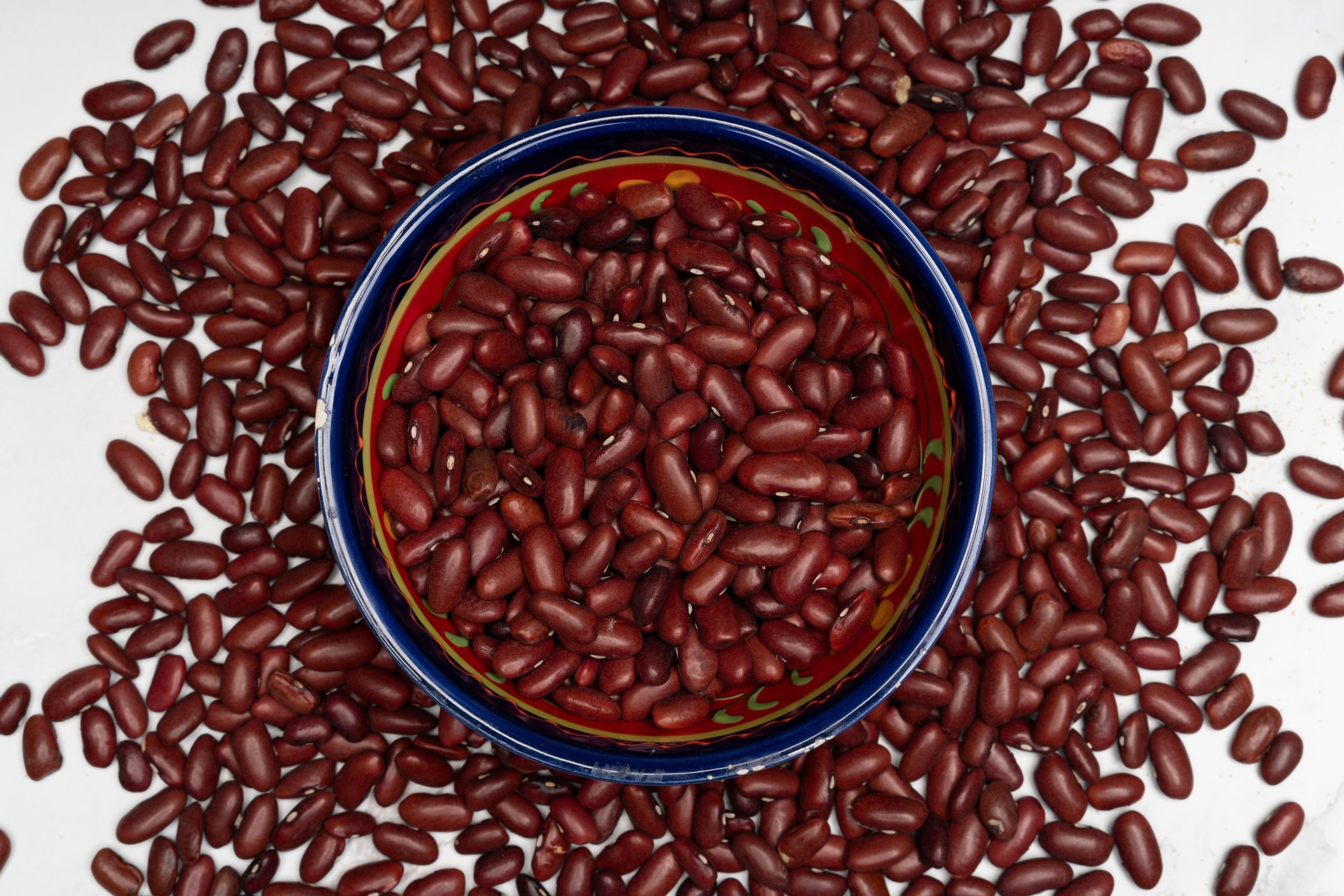
The texture of kidney beans bathing in tomato sauce and ground beef — Janet’s chili recipe in a nutshell — was nothing like the gag-inducing Campbell’s pork and beans my parents served me. The kidney beans themselves were firm, not mushy or mealy. And the ground beef in the sauce gave some weight to it, a nice mouthfeel. Not slimy.
It was all downhill from there. Each time Janet made a batch of chili I had a bowl, each bowl bigger than the last, and with less and less sour cream and shredded cheddar to get in the way of the chili. I even started to have some of the cornbread Janet occasionally made to go with the chili. Cornbread was another of my father’s favorites, and one which, as a kid, I refused to eat. Once I realized I liked chili, the road between saying no to cornbread and liking it was short.
After Janet started in the travel business, dinner became my problem. Hunger is a remarkably effective cooking teacher, and I learned fast. I came up with new recipes, some of which even included beans in the ingredient list. Like my Tex-Mex black bean and rice salad with a spritz of fresh lime juice and lime zest over top. I Marylandized it by adding a generous amount of local sweet corn. I resisted the temptation to add Old Bay. Barely.
I even felt empowered to come up with my own chili recipe. There was nothing wrong with Janet’s chili, but by this time I had developed particular preferences, and I decided to come up with a chili recipe that catered to those preferences. It took me a few years to perfect, but it’s the recipe I still use. It takes two 15-oz cans of kidney beans, and I love every one of them.
The difference, I discovered, between chili and pork and beans is in the beans. Chili uses kidney beans; the latter uses pea beans or navy beans — the beans that made me gag, whether they were in pork and beans or my Dad’s favorite ham bone and navy bean soup.
If you’re a fan of the Star Trek movies, this was the point where I faced my culinary Kobayashi Maru. Baked beans. Rather than admit defeat, that I could never like the dish, I pulled a James T. Kirk and changed the rules. I came up with a recipe for pork and beans — baked beans to be more precise — that substituted kidney beans for pea beans. Something I like for something that made me gag.
That was the key. Replace the squishy texture of pea beans with the firmness of kidney beans. With that settled, I tackled the rest of the recipe. After some trial and error, the recipe I landed on combines the best versions of baked beans from the North and from the South. I use the bacon, onion, molasses, and slow cooking of Boston baked beans, along with the tomato-based sauce, smoked seasonings, peaches, and the meat from slow cooked country cut ribs that you’ll find in a Southern BBQ bean recipe. To round it all out, my choice of seasonings is unconventional. Exactly my style when it comes to cooking.
I didn’t set out to write a sappy article about my parents’ sacrifices. I set out to share my discovery of a baked bean recipe I could actually eat. Turns out I couldn’t do one without the other. I call my recipe Jeff’s Maryland Baked Beans. There isn’t anything specific to Maryland agriculture or food culture in the recipe, but the name reflects the North/South fusion that my dish captures. Maryland lies south of the Mason Dixon line, but it keeps one foot in the North. I think the name fits.
Some beans just needed the right rules.
Get the Recipe