Tradition, Improved
My best tips for a moister, tastier Thanksgiving turkey.
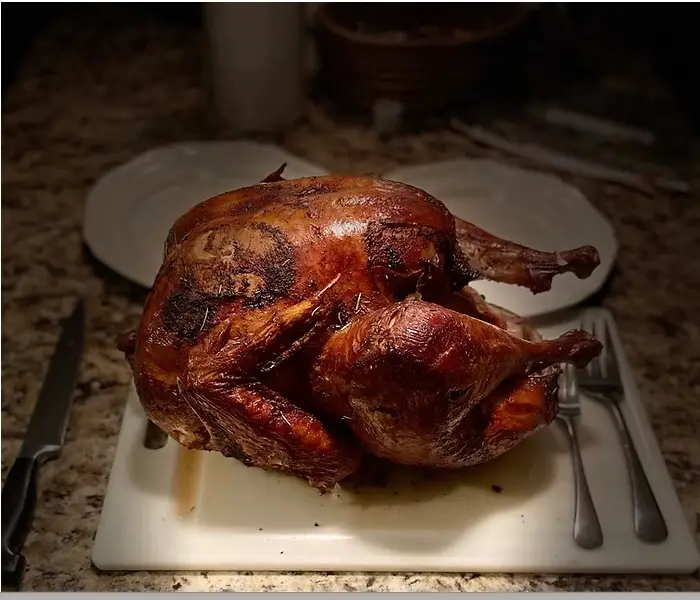
If you’ve read the first two parts of this series, you know that just about every turkey on a Thanksgiving table is a broad breasted white. You know the breed was developed for a high ratio of breast meat and to grow from egg to market weight in four or five short months. And you know that the trade-off for those traits, which producers love, is flavor. As in it has none.
I’ve tried everything in the book over the years to make the most of my broad breasted whites. I’ve found a few things that improve the moistness of my Thanksgiving bird, but there’s only so much you can do to add flavor to a turkey bred to be flavorless (thank you, Big Ag). That doesn’t mean you have to suffer through a dry, tasteless turkey this Thanksgiving.
Here are my best tips for this year’s Thanksgiving dinner.
- Don’t overspend on the turkey. The only thing worse than a dry, tasteless turkey is paying a premium price for it. Buy the cheapest store-brand frozen bird you can find because they all end up dry and tasteless. With one exception. If you can get your hands on a Jaindl Farms turkey, sold at Wegmans as Wegmans Premium Holiday Grand Champion, do it. It will cost a bit more, not a bunch, but a turkey that’s good enough for the White House is good enough for my table, and worth every penny.
- Spend most of your time on the sides. Since you can’t do much to improve the taste of your turkey, focus on the rest of the meal. Make a crazy rich gravy out of the giblets and slather your turkey in it. You’ll never know it’s the gravy you’re tasting rather than the turkey. Also, the side dishes, especially the stuffing. I love love love a mouthful of turkey, gravy, and stuffing. You get the texture of the turkey, and the gravy and stuffing deliver the flavor and moistness the turkey can’t.
- Brine it. Broad breasted whites carry so much breast meat that by the time the deepest part reaches a safe 165°F, the rest of the bird is overcooked. Brining builds in extra moisture, which makes the bird more forgiving of the overcooking necessary to make it safe to eat.
- Don’t bother basting. It’s a waste of time, especially if you brine your bird. The juices bathe the skin and cook off. None of it makes it into the meat, which is where it needs to be to make the turkey juicier, and basting makes it harder to get that golden, crispy skin.
- Skip the injections. Injected marinades and fats don’t get into the muscle fibers. They pool under the skin or in the spaces between the muscles, and as soon as the heat hits, they render out and drip into the bottom of your pan, taking their flavor with them.
- Cheat on the temp. But only a little. The USDA says a turkey is safe at 165°F, but you can pull it from the oven when the breast reads 155°F to 160°F. The temperature will continue to rise while the bird rests. Use an oven-safe probe thermometer and check it with an instant-read. Once they agree the turkey is between 155°F and 160°F, pull the bird out of the oven. Let it rest for 30 minutes before carving and two things happen. Juices pushed out of the muscle during roasting settle back in. And heat from the outside of the bird keeps working its way in, so the center climbs to 165°F while it rests. No need to tent it with foil either.
- Ignore the pop-up timer. Pop-up timers are set to pop between 180°F and 185°F. If you wait for it, your turkey is already hopelessly overcooked in places and can still be undercooked in others. Instead of spending extra cash on a name brand bird, or worse yet a “fresh never frozen” bird, invest in a good oven-safe probe thermometer and cross-check with an instant-read thermometer. When the bird hits 155°F to 160°F, pull it and let it rest for 30 minutes.
- Think outside the box. As in the oven. If you really want a turkey with flavor, consider a smoker or a sous vide cooker for your Thanksgiving turkey. If you don’t own the equipment or haven’t used it much, stick with the oven until you’ve built up some experience. But if you know your way around either one, both can put flavor into a turkey in ways an oven just can’t. And it’s really hard to overcook a turkey in a smoker or a sous vide bath. It can be done, but you almost have to want to.
- DON’T DON’T DON’T deep fry your turkey. Turkey fryers cause fires, burns, and property damage every Thanksgiving, which is already the peak day of the year for home cooking fires. The National Fire Protection Association discourages using them at all. So do I.
More About Brining
The best thing you can do for a broad breasted white turkey is brine it in the fridge for 12 to 18 hours after it’s fully thawed and before you cook it. There are two ways to brine: dry or wet. Dry brining means rubbing the turkey with salt and letting it sit in the fridge for 12 to 18 hours. The salt draws moisture out of the turkey, the moisture dissolves the salt, and the salty liquid gets drawn back into the meat. People who like more turkey flavor prefer dry brining. You’re using moisture that’s already in the bird rather than adding water with a brining solution, so you aren’t diluting what flavor it has. At least that’s the theory.
Wet brining means dissolving 1¼ cups of Diamond Crystal kosher salt in a gallon of water and submerging the turkey in it, in the fridge, for 12 to 18 hours. Make as much brine as you need to cover your bird, using the same ratio of salt to water. The brand of kosher salt matters, because flake sizes vary. If you measure by weight, it doesn’t matter. If you measure by volume like I do, it’s critical. David’s is a popular kosher salt in grocery stores around here, but its flakes are much finer and more dense, so a cup of David’s is about as salty as 1¾ cups of Diamond Crystal, the gold standard for professional chefs. That said, brining isn’t baking. You don’t have to be precise. A weaker or stronger brine will both do the trick. Just don’t use table salt. It’s much more dense than kosher salt, which makes it easy to oversalt, and many cooks find the iodine leaves an off taste. I know I do.
I’ve tried both wet and dry brining, and I prefer wet. Broad breasted whites have so little flavor to begin with that I don’t find wet brining dilutes the flavor for my turkeys. You can’t dilute what isn’t there to begin with. Turkeys also soak up some water during processing, when they’re chilled in a cold-water bath to slow the spread of bacteria. The label tells you how much, usually somewhere between 4% and 8%. I use Bell’s Turkey Brine rather than measuring out kosher salt and water. It has other stuff like freeze-dried apples which do nothing for the flavor, but the basic brine solution is golden.
Some people prefer the convenience of a pre-brined or kosher turkey. Kosher turkeys are salted as part of koshering, so both come pre-seasoned. Don’t brine them again, or your turkey will come out too salty. The same goes for self-basting birds like Butterball, which come injected with a salt solution. Once I tried pre-brined or kosher turkeys and realized how much more I end up paying for convenience, I went with brining my own grocery store bird. You’ll spend 10% to 40% more for a pre-brined or kosher bird than you will for an unbrined bird, and all you get for the extra money is saltwater. You can make your own brine or use Bell’s Turkey Brine for pennies on the dollar.
There are loads of creative brine recipes out there, each claiming to add all sorts of exotic flavors to your bird. They don’t work. The only things that get very far into the meat during brining are salt and water. The flavor compounds in herbs, spices, and fruit barely make it past the surface; the molecules are too big to get past the muscle cell membranes. A brine loaded with aromatics will make the skin, and your kitchen, smell good while it cooks, and there’s something to be said for that. But it won’t make your turkey taste any better.
Fresh or Frozen?
I covered this in Part 2, so the short version: “fresh” turkeys cost more, but the USDA only requires that a fresh bird has never been chilled below 26°F, which to me is a frozen bird. In my taste test a turkey that spent three months in my sub-zero freezer was every bit as good as a fresh one. The one good reason to buy fresh is fridge space. A 20-pound frozen turkey needs four or five days to thaw in the fridge, and fridge space is at a premium around the holidays. If yours is packed, let the grocery store do the thawing. You’ll pay more for it, but for some people that’s worth it. I buy frozen and make room in my fridge.
Cooking Outside the Box (aka the Oven)
My son Rob is big into using his smoker for meat, including poultry. I don’t own a smoker and have never cooked anything in one, but I know that if I wanted to try, Rob would be there for me. The smoker community is like that. There are loads of online forums where smoker aficionados are eager to share their hints, tips, and experiences.
Cooking a turkey sous vide is a little more challenging. Like smoking, it takes special equipment, and you have to understand how time and temperature work together, so the turkey is safe to eat without being overcooked. The good news is that the science isn’t hard, and the equipment gets cheaper every year.
If you’re interested in sous vide turkey, look up Michael Voltaggio’s sous vide turkey. Michael and Bryan Voltaggio are brothers, professional chefs, and Top Chef alumni who grew up in Frederick, Maryland. Michael shares his method, and in a head-to-head taste test against Bryan’s brined, conventionally roasted turkey, Michael’s sous vide bird came out on top.
I’ve tried cooking turkey sous vide using Michael’s approach, and the bird does come out moister. Cooking a Thanksgiving turkey sous vide has real advantages, but it takes extra work that I don’t find worth the trouble. First, you have to break the turkey down into breasts, legs, and thighs. Each piece gets sealed in its own bag and cooked separately, so each one can be cooked to its ideal temperature. Because time and temperature work together, sous vide lets you cook the breast well below 165°F and hold it there long enough to be safe to eat, which is why it stays so juicy. The dark meat gets cooked hotter and longer. And since the bag is vacuum sealed, any aromatics you add stay pressed right up against the meat the whole time. Which is not to say they get absorbed into the meat any better than brining. But at least the surface layer will be tasty. Cooking your turkey sous vide takes an entire day since you cook the white meat and dark meat separately. Too much trouble for my Thanksgiving table.
The one advantage to cooking your turkey sous vide is that the method is very forgiving. If you don’t pull the turkey the minute it’s done, you haven’t ruined Thanksgiving. It sits happily in its bag at whatever temperature you set the water to. You wouldn’t want to leave it for hours past the recommended time, or the meat turns mushy, but missing the mark by 15 or 30 minutes won’t matter.
And it’s safe. Proper sous vide cooking effectively pasteurizes your food, at a gentler temperature held for a longer time. It’s a bit more complicated than that, but once you read up on the time and temperature requirements for different proteins, you’ll quickly become a sous vide champ.
There are a couple of downsides. The method is so gentle that it leaves the skin pale and flaccid rather than brown and crispy. That gentleness is what keeps the meat moist, but if you like crispy skin, you’ll need an extra step. Peel the skin off before you bag the parts, lay it flat on a sheet pan, and crisp it in a hot oven or under the broiler shortly before serving. Then lay it back over your perfectly cooked turkey and you get the best of both worlds.
The other downside is that you lose the showstopper: a whole golden-brown turkey on a platter in the middle of the Thanksgiving table. You have to break the bird down to fit it into the sous vide bags. The impact of a whole roasted bird fades fast once you bite into an overcooked, dry, tasteless broad breasted white, but the extra work required to prep the turkey for the sous vide cooker isn’t worth the return. Because as I said earlier, you can’t work with what isn’t there. It will be more moist for sure. But it won’t be any tastier. Broad breasted white turkeys have no taste no matter how you cook them.
Invest in the Sides
Turkey is the centerpiece of Thanksgiving dinner because of tradition, not because it brings much flavor to the table. There isn’t much you can do about that, but you can bring the flavor with the side dishes. Stuffing, or dressing, is one dish where you can really get creative, and a good homemade gravy is another. Both will liven up the otherwise bland turkey. My own stuffing starts with King’s Hawaiian rolls and ends with andouille, and you’ll find the recipe here. One of Janet’s family traditions is to serve sauerkraut with the turkey, an old Baltimore custom. Now that’s creative. Sauerkraut isn’t in my Thanksgiving wheelhouse, but it does deliver flavor. Every family has its own traditions, and Thanksgiving is a good time to indulge them. Tradition!